
Voices Across IASK
Sweden: Building Bridges for the Future of Complementary Health
Country: Sweden
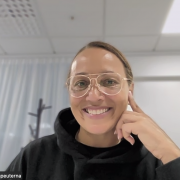
Interviewee: Desiree Blomberg
Role: Secretary General
Association: Kroppsterapeuterna (The Association of Body Therapists, Sweden)
Members: Approximately 3,700 members, including kinesiologists and other complementary health practitioners
This month, we visit Sweden and meet Desiree Blomberg, Secretary General of Kroppsterapeuterna. We spoke about current priorities, political advocacy, accessibility to healthcare services and what gives her hope for the future of the profession.
Sabine:
Tell us a little about yourself and what is currently happening within your association.
Desiree:
My name is Desiree Blomberg and I am the Secretary General of Kroppsterapeuterna in Sweden. My role is highly operational, which means I work closely with our team of four employees on a daily basis.
Like many associations and organisations in Sweden, we have experienced a decline in membership during recent years. Today, we have approximately 3,700 members, including kinesiologists and many other complementary health practitioners.
A great deal has been happening within the association. For several years we focused on strengthening our internal infrastructure by updating our membership systems, website and financial systems. Now that these foundations are in place, we can devote more energy to the issues that matter most to our members.
One of our key priorities is political advocacy. We are very encouraged by the fact that politicians are increasingly willing to listen to our perspectives. We have met representatives at national, regional and municipal levels and have had discussions with most of Sweden’s political parties.
One important issue concerns VAT rates. Today there are significant differences depending on the type of service provided. Exercise and physical training may be taxed at a lower rate, while complementary health treatments, nutritional counselling and coaching are generally subject to 25% VAT.
We believe this creates unnecessary barriers for both practitioners and clients. Health services should be accessible to more people, and practitioners should be able to build sustainable businesses. We would like to see a fairer and more consistent approach that recognises the value of preventive and complementary healthcare.
Accessibility is not only about recognition; it is also about affordability. Even when support systems exist, many people still struggle to afford the services that could help them improve their health and wellbeing.
We understand that change often happens step by step. That is why collaboration is so important. We need ongoing dialogue between practitioners, associations, policymakers and other stakeholders to find practical solutions that benefit everyone.
International cooperation is also becoming increasingly important. Through organisations such as IASK, we can learn from one another, exchange ideas and strengthen professional relationships across borders. We see great value in continuing to develop these international connections.
Sabine:
What gives you hope about the future?
Desiree:
I am very optimistic about the future.
Just yesterday, I met with our newly elected board for the first time. The level of energy, enthusiasm and competence in the room was truly inspiring.
I also see growing engagement across many different professional networks and organisations. More people are willing to collaborate, share knowledge and support one another.
Perhaps most encouraging is the growing interest from politicians. During the five years I have worked at the association, I have seen a clear shift. Conversations that once felt difficult to initiate are now welcomed.
In fact, I have even been invited to participate in discussions during Almedalen, Sweden’s largest political forum. To me, that is a strong sign that our profession is increasingly being recognised and taken seriously.
The combination of strong leadership, committed members, growing collaboration and increased political interest gives me great hope for the future.
A Voice from Sweden
Thank you, Desiree, for sharing what is happening within Kroppsterapeuterna and for highlighting the importance of collaboration, accessibility and advocacy.
Through Voices Across IASK, we continue to share the stories, initiatives and experiences that strengthen our global kinesiology community—one voice at a time.