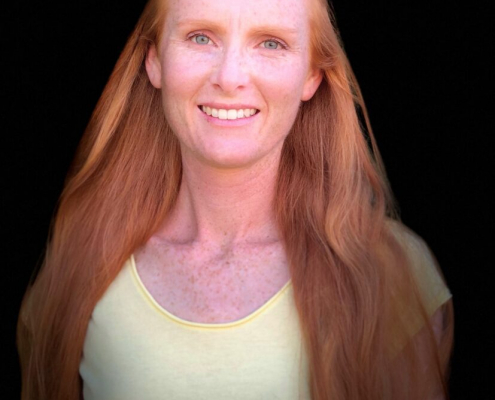
Alison McCarthy (Zeidler)

ÖBK – Österreichischer Berufsverband für Kinesiologie

Der ÖBK ist ein Verein, dessen Tätigkeit nicht auf Gewinn gerichtet ist und bezweckt den Zusammenschluss der Kinesiologen für die Aus-, Weiter- und Fortbildung, die Wahrung und Förderung der Interessen der Mitglieder und deren Vertretung gegenüber der Öffentlichkeit, außerdem die weitere Erforschung des Menschen auf der Basis der Kinesiologie.

Der Österreichische Berufsverband für Kinesiologie (ÖBK) sieht sich als die Vertretung aller Kinesiologen und an der Kinesiologie interessierten Menschen in Österreich.

Durch Ihre Mitgliedschaft unterstützen Sie die Arbeit des ÖBK, die Verbreitung und Akzeptanz der Kinesiologie in der Öffentlichkeit, sowie die Idee eines Gemeinsamen.

Die Kinesiologie ist in Österreich eine der verbreitetsten Arbeitsmethoden im Bereich der Human-Energetiker. Eine Reihe von Einzelkämpfern gründete 1995 den Österreichischen Berufsverband für Kinesiologie, um Strukturen und Qualitätsstandards für unseren Beruf zu schaffen. Bis zum heutigen Tag ist es gelungen, unsere Arbeit auf einen hohen Ausbildungsstand zu bringen und den AnwenderInnen einen Platz innerhalb der Energetiker und unserer Gesellschaft zu schaffen, wo die Ideen und Philosophien der Methoden und ethischen Ansprüche umgesetzt werden, die diese wertvolle Arbeit braucht.

Der ÖBK steht für

  • ein klares Berufsbild
  • Qualitätssicherung und
  • seriöse und wirksame Leistungen für Menschen, die Hilfe in der Kinesiologie suchen.

Mit Ihrer Mitgliedschaft beim ÖBK können Sie aktiv an der Entwicklung Ihres eigenen Berufes mitarbeiten und Ihre eigenen Ideen und Visionen einbringen bzw. Schritt für Schritt tatkräftig umzusetzen.

Fürs Umsetzen von großen Idee benötigt es die Bündelung aller positiven Kräfte in unserem Land.
Denn ein Miteinander der verschiedenen Methodenvertreter und -vertreterinnen macht uns richtig stark. Melden Sie sich bei Ihrer Beirätin, im Sekretariat oder bei einem Level-3 Mitglied in Ihrer Nähe.
Wir freuen uns sehr, wenn Sie diese Kraft unterstützen und an ihr Teil haben.

DGAK (Professional Kinesiologists in Germany)

In February 2000 DGAK established a professional apprenticeship. The group of developers was comprised of owners of institutes and “normal” members. The content is based on personal development and self-improvement for the client. The achieved knowledge is about pedagogy, communication, psychology, stress reduction, health prevention. They created a three-year apprenticeship divided in three parts. After the last exam the participant completed/will complete 600 kinesiology hours in classroom training and an additional minimum of 600 hours of self-studying.
At the moment there are five institutes in Germany offering this DGAK apprenticeship.
The DGAK creates and monitors the apprenticeship and is part of every final exam with one DGAK
auditor. After the exam the examinee has the opportunity to be DGAK member Level 3 BK-DGAK. BK
(Begleitende Kinesiologie) DGAK shows the high degree of the three-year apprenticeship.
Medizinisch – Therapeutische Kinesiologie DGAK (Medical – Therapeutical Kinesiology DGAK)
Since 2005 DGAK supports education for physicians, dentists, natural healers (German Heilpraktiker),
physiotherapists, midwifes and assistance personnel (according to the German law).
200 hours of kinesiology (150 hours classroom training, 50hours for writing 18 case studies and thesis).


The final exam is supervised by a DGAK auditor and one representative of the professional association.


After the exam the examinee has the opportunity to be DGAK member minimum Level 1 MTK-DGAK
(depends on attested kinesiology hours).


DGAK membership:


Actually we are 780 members, 730 active and 50 passive (sponsor, apprentice, retiree)


Level 1
To become a member of DGAK every person needs a minimum of 150 hours of kinesiology and a
personal supervision with one of the 17 supervisors of our organization (Level 1). For every level the
intended member has to present 20 hours of exercise, 20 hours of personal process and 20 hours of
giving balances.


Level 2
The next step as shown on the DGAK website is Level 2 with 300 hours of kinesiology and the same
procedure as for the first level.
Level 3
Contains 500 hours of kinesiology and the mentioned 3×20 hours papers plus the writing of 18 case
studies and a certificate about communication techniques. The validated seminars are listed on a course
list. The courses are divided in
1. Historical courses (TFH, BG etc.)
2. Established course on the international market (5 years on the market with minimum 150 participants).
3. Additional courses (accepted by market by teaching minimum three times with 25 participants).
These members are professional kinesiologists by using kinesiology in addition to their
occupation or to build up their own kinesiology existence in part or full time.
It is our intention to be a forum for all kinds of kinesiologists.


Our professional situation:
1. Kinesiology gets more and more accepted by society
2. Kinesiology is divided in personal development and medical-therapeutical directions by law

a. Self-improvement, personal development, new ways of pedagogy and therapeutically alternative ways           plus health prevention are booming so there is definitely a future of our methodn

      b. Physicians and natural healers insert kinesiology in their profession

3. Some insurance companies accept kinesiology as a prevention method
4. Public health department, insurance for professional liability for example accepts kinesiology
For more please click here!

Kinesiology Association of Ireland


The Kinesiology Association of Ireland (KAI) is a national Kinesiology body in Ireland representing the professional interests of qualified Kinesiology practitioners, Kinesiology students and the personal interests of the public. The policy of the KAI is to support and encourage our members and to be the public face of Kinesiology in Ireland. The Kinesiology Association of Ireland was founded in 1986 by Professional Kinesiologists, to support one another and to promote Kinesiology.

“The KAI has established minimum educational requirements for Professional Membership, including both Kinesiology and other key subjects. The KAI evaluates courses and assigns credits, which can be accumulated to achieve professional status.”

Alexis Costello

Modalities used: TFH, SIPS, GEMS, N.O.T

Modalities taught: TFH Synthesis, TFH Trainer for Costa Rica, SIPS, GEMS

Alexis has been a Touch for Health instructor since 2007 and is now an Instructor Trainer, teaching the next wave of teachers. As one of a small handful of SIPS (Stress Indicator Point System) instructors in the world and the creator of the GEMS program, she travels internationally to speak about and teach these modalities to others. Publisher of the international journal KinesioGeek Magazine, she is striving to help other holistic practitioners succeed.

Alexis is certified in many aspects of holistic healing including herbology, aromatherapy, Bach Flower Remedies, N.O.T (Neural Organizational Technique), Brain Formatting, and massage. Canadian born, she moved in 2016 to Costa Rica with her family to live self-sufficiently in the jungle. Visit www.alexiscostello.com for more information.

www.gemskinesiology.com to subscribe to KinesioGeek Magazine or find out more about GEMS as a modality

Follow @healthylexi

https://www.facebook.com/alexis.costello.7